Longevity is often marketed as a hunt for hidden inputs: a rare supplement, a perfect biomarker, a trick for reversing time. The quieter truth is more useful. Strength, movement, sleep, and a nourishing dietary pattern remain the foundation. Protein matters because it helps support one of the things we most want to keep as we age: function.
Strength is a health asset
Muscle is not merely aesthetic. It helps us climb stairs, carry groceries, recover from illness, stay active, and preserve independence. The National Institute on Aging highlights aerobic, strength, and balance activity as valuable parts of healthy aging; regular movement is associated with better physical function and quality of life.
Protein is one component of this picture. It supplies amino acids used throughout the body, while resistance training provides the signal that tells muscle to adapt. Neither is a replacement for the other.
Build meals, not a spreadsheet
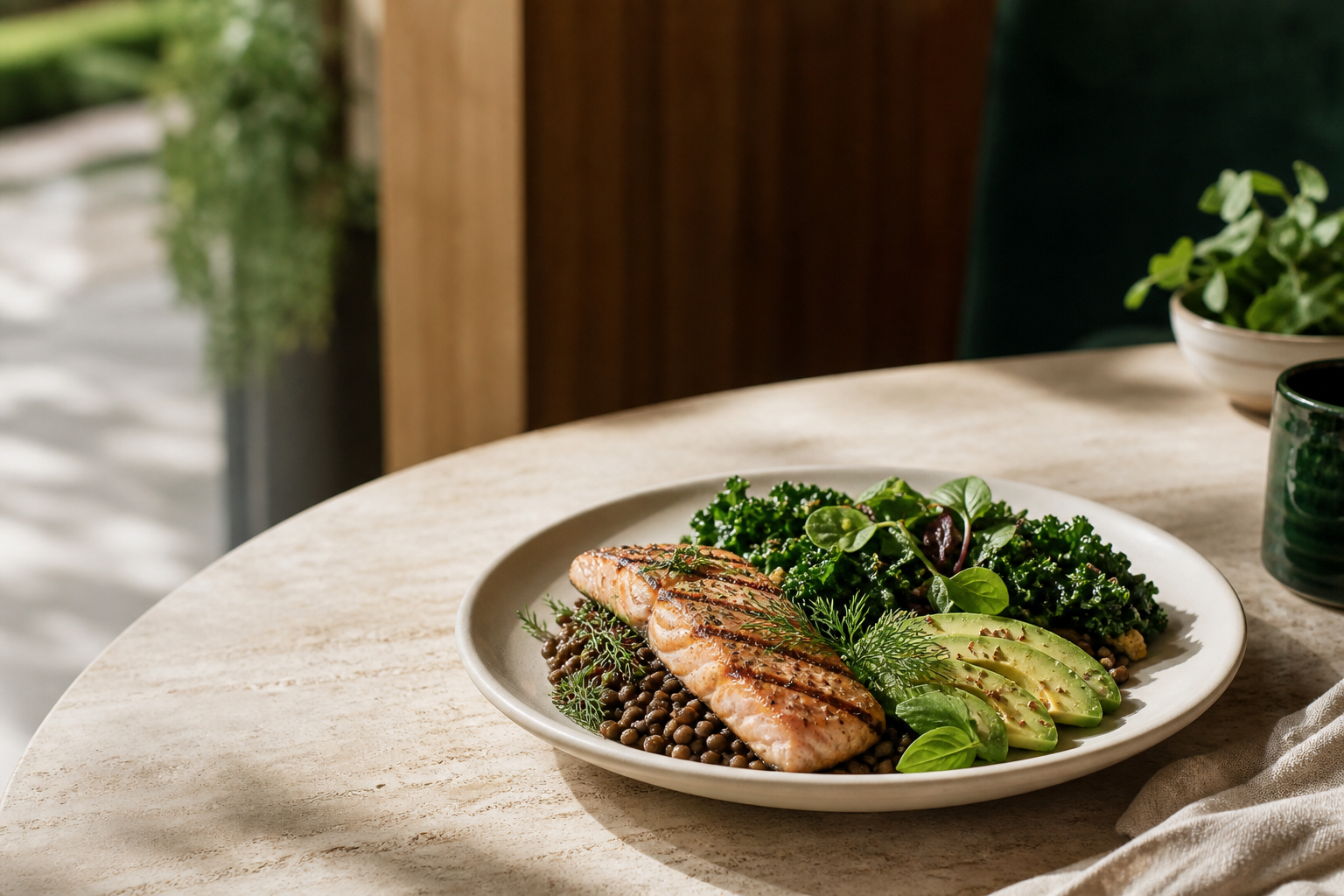
Instead of treating protein as a daily contest, begin with a practical structure: include a meaningful protein source at meals you already eat. That may be eggs, Greek yogurt, beans, lentils, tofu, fish, poultry, lean meat, or another choice that suits your preferences and health needs.
The quality of the whole plate still matters. Pair protein with fibre-rich plants, carbohydrates that support your activity, and fats that make meals satisfying. Consistency beats a week of perfect tracking followed by abandonment.
Personal needs vary
Age, body size, activity level, appetite, kidney disease, pregnancy, medications, and medical history all affect nutritional needs. If you have kidney disease or have been given medical nutrition guidance, speak with your clinician or a registered dietitian before materially changing protein intake.
A Sanctuary practice
Choose two meals this week to make more complete. Add a protein source, a colourful plant, and a carbohydrate that supports your energy. Then add two strength sessions appropriate to your experience. The goal is not to become a different person by Monday. It is to build the physical capacity that makes the rest of life easier.
Sources: National Institute on Aging, Health benefits of exercise and physical activity: https://www.nia.nih.gov/health/exercise-and-physical-activity/health-benefits-exercise-and-physical-activity. National Institute on Aging, What do we know about healthy aging?: https://www.nia.nih.gov/health/healthy-aging/what-do-we-know-about-healthy-aging.
This article is for general education and is not medical advice.