
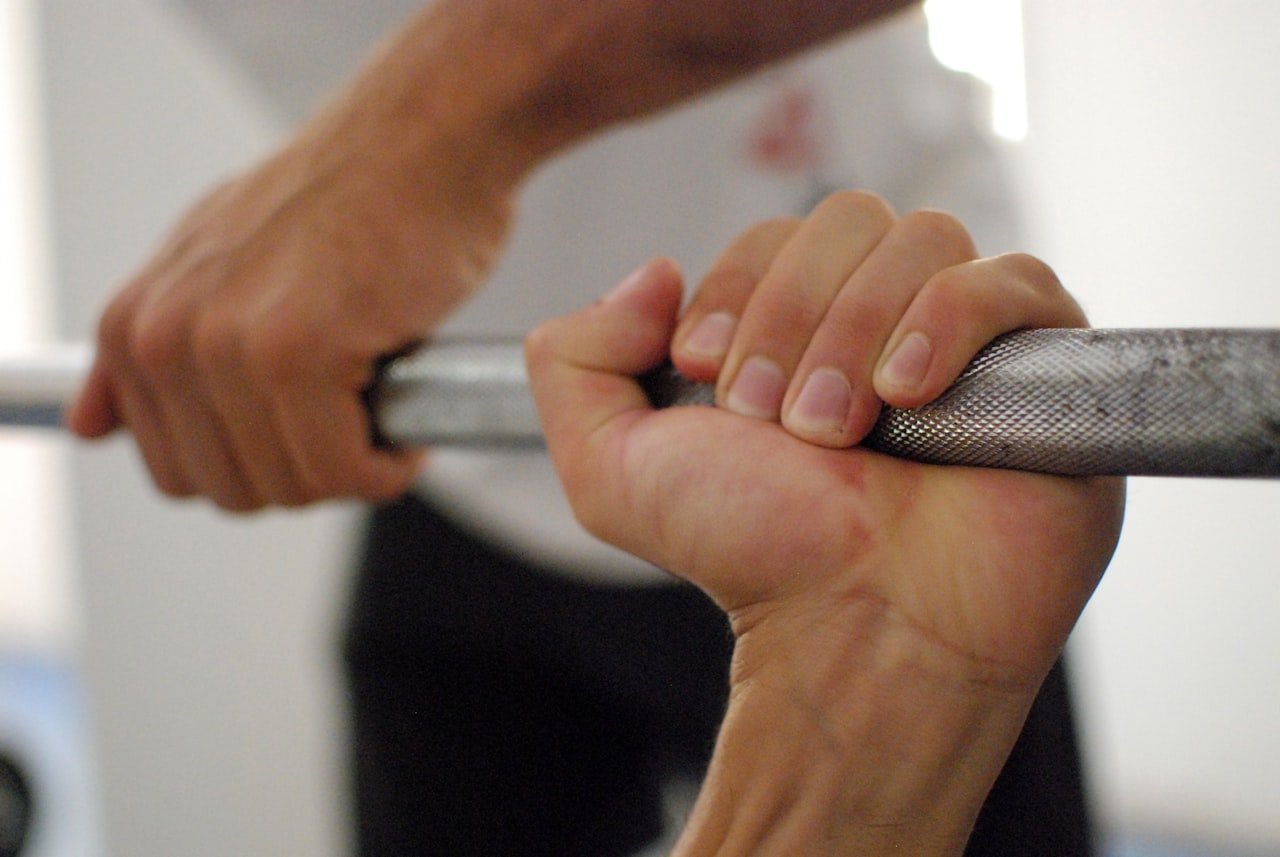
If you wanted to guess how healthy someone’s next decade will be, you might reach for blood pressure, cholesterol, or step count. Researchers studying aging increasingly reach for something simpler: how hard someone can squeeze.
Grip strength has become one of the more consistent predictors of health outcomes in aging research, and it is almost comically low-tech to measure.
What the research actually found
Large studies following middle-aged and older adults have found that for every 5-kilogram decrease in grip strength, all-cause mortality risk rises by roughly 16 percent, along with increased risk of cardiovascular death, stroke, and heart attack. In some analyses, grip strength has outperformed systolic blood pressure as a predictor of overall and cardiovascular mortality.
Strength, not just size
An important distinction in this research: muscle strength predicts health outcomes more strongly than muscle mass alone. Two people can have similar muscle size and different strength, and it is the strength, the functional capacity of that muscle, that tracks more closely with health status. This is part of why grip strength is used as a marker for sarcopenia, the age-related loss of muscle strength and function.
Why it matters even if you never test your grip
Grip strength is not something you train in isolation so much as a byproduct of overall strength training. Reduced grip strength usually reflects broader declines in muscle strength throughout the body, which is what actually connects it to falls, frailty, and mortality risk. Think of it less as a target and more as a signal of how your training is going.
A Sanctuary practice
Include two strength sessions a week that involve real resistance: carrying, pulling, or gripping something heavy, whether that is a barbell, resistance bands, or your own bodyweight. Strength built anywhere in the body tends to show up in grip strength as a side effect, and vice versa. Consistency matters more than the specific exercises you choose.
Sources: PubMed, Grip strength predicts cause-specific mortality in middle-aged and elderly persons: https://pubmed.ncbi.nlm.nih.gov/17398228/. PMC/NIH, Handgrip strength as a potential indicator of aging: https://pmc.ncbi.nlm.nih.gov/articles/PMC11814436/.
This article is for general education and is not medical advice.